India is outpacing the world on TB decline but the remaining distance is harder, messier, and can’t be closed with diagnostics alone
India set an ambitious target: to eliminate TB by 2025, five years ahead of the global 2030 SDG goal. Now that it’s 2025, that target - reducing incidence to fewer than 44 per lakh people - has not been achieved. The current rate remains at 187 per lakh. However, what matters equally is the trend. And on that front, the data tells a truly impressive story.
What the Numbers Actually Say
The WHO Global TB Report 2025, released on 12 November 2025, confirmed that India’s TB incidence rate declined by 21% between 2015 and 2024 - from 237 to 187 per lakh population. Over the same period, the global decline was 12.3%. India’s rate of reduction is nearly double the world average and among the highest recorded for any high-burden country.
Let’s expand on that comparison. Globally, 30 high-burden countries account for 87% of TB cases. Among these, India (25%), Indonesia (10%), and the Philippines (6.8%) are the top three. While some countries like Indonesia and the Philippines saw incidence rates rise between 2015 and 2024, India achieved a sustained downward trend. South Africa is the only high-burden country to reach the End TB Strategy’s second milestone of 50% reduction. India exceeded the first milestone of 20% reduction - a target originally set for 2020 - by 2024. It is behind schedule on the 2025 milestone, but it remains among the shrinking group of high-burden countries progressing in the right direction.
Treatment coverage demonstrates a compelling story. India increased from 53% in 2015 to over 92% in 2024, surpassing most high-burden countries and exceeding the global average. The treatment success rate under TB Mukt Bharat Abhiyan reached 90%, compared to the global average of 88%. Early detection of drug-resistant TB is at 92% through upfront Rifampicin susceptibility testing, versus 83% globally.
The Infrastructure That Made This Possible
Numbers don’t happen by themselves. India now operates the world’s largest TB laboratory network: 9,391 rapid molecular testing facilities and 107 culture and drug-susceptibility testing labs. Over 500 AI-enabled handheld X-ray units are deployed for community-level screening, with 1,500 more being delivered. Services have been decentralised through 1.78 lakh Ayushman Arogya Mandirs, bringing TB care closer to where people actually live.
The Ni-kshay ecosystem has become a vital support system. Under the Ni-kshay Poshan Yojana, nutritional aid was increased from Rs 500 to Rs 1,000 per month per patient. Since April 2018, Rs 4,406 crore has been directly transferred to 1.37 crore beneficiaries. Over 6.77 lakh Ni-kshay Mitras have distributed 45 lakh food baskets. More than 2 lakh My Bharat youth volunteers provide psychosocial support to patients. These aren’t just programme metrics - they embody meals, emotional support, and ongoing engagement reaching people who would otherwise face treatment alone.
The TB Mukt Bharat Abhiyan, launched in December 2024, screened over 19 crore vulnerable individuals and identified 24.5 lakh patients, including 8.61 lakh who were asymptomatic. Detecting TB in people who are unaware they are ill - that’s a level of proactive public health that exceeds passive case detection.
Where the Hard Yards Remain
Progress does not mean the job is complete. Despite the decline, India still accounts for 25% of global TB cases, 28% of TB deaths among HIV-negative people, and 32% of global multidrug-resistant TB cases. Drug-resistant TB requires longer treatment, causes more severe side effects, and has lower success rates - although India’s MDR-TB treatment success has improved to 87%, a notable achievement.
State-level differences mean that national averages only tell part of the story. Delhi’s TB incidence is approximately 499 per lakh, whereas Kerala’s is 76 per lakh. This highlights variations in population density, private sector involvement, health-seeking behaviour, and existing infrastructure. What is effective in one context does not automatically work in another, and India’s programme must be sophisticated enough to recognise and accommodate that diversity.
And then there are the social determinants that no amount of diagnostics alone can fix. Nearly 7.44 lakh TB patients were found to be undernourished in 2022. Malnutrition remains one of the largest attributable risk factors for TB in India - greater than HIV in terms of population-level impact. A country that produces more food than almost any other and yet has among the highest rates of undernutrition - that contradiction sits at the heart of the TB challenge. Isse sirf dawai se solve nahi kar sakte.
The Stigma That Infrastructure Can’t Reach
We can implement molecular testing in every district and install AI-powered X-rays in every block. However, undoing decades of social stigma around TB is not straightforward. Patients often keep their diagnosis hidden from neighbours and employers. Women with TB face repercussions in marriages. In many communities, TB is still whispered about rather than openly discussed. This leads to delays in seeking care, treatment discontinuation, and continued transmission.
The 2 lakh youth volunteers serving as Ni-kshay Mitras for psychosocial support is a genuinely smart intervention. However, community-level stigma reduction requires sustained, culturally sensitive engagement - not one-off campaigns but continuous community dialogue. The TB-HIV programme learned this lesson. It’s time the broader TB programme applied it consistently.
The Road Ahead: Three Things That Matter Most
First, expand on what’s working in treatment innovation. The BPaLM regimen for drug-resistant TB - bedaquiline, pretomanid, linezolid, moxifloxacin - reduces treatment duration from 18-24 months to just 6 months. That’s transformative for patient compliance and health system capacity. Six vaccine candidates are currently in Phase 3 trials globally. India should position itself as both a trial site and a manufacturing hub for the next generation of TB tools.
Second, address social determinants with the same seriousness as biomedical factors. Nutrition, housing, poverty, indoor air pollution - these are not “softer” issues. They are upstream drivers of disease. You cannot medicate your way out of an epidemic that feeds on inequality. The Ni-kshay Poshan Yojana is a good start, but nutritional support must be regarded as a clinical intervention, not just welfare.
Third, integrate TB care with NCD management. TB does not exist in isolation; it coexists with diabetes, tobacco use, HIV, and malnutrition in the same bodies and communities. India’s TB-DM collaborative framework has existed since 2017, but operational integration at the district level needs to align with the policy ambition.
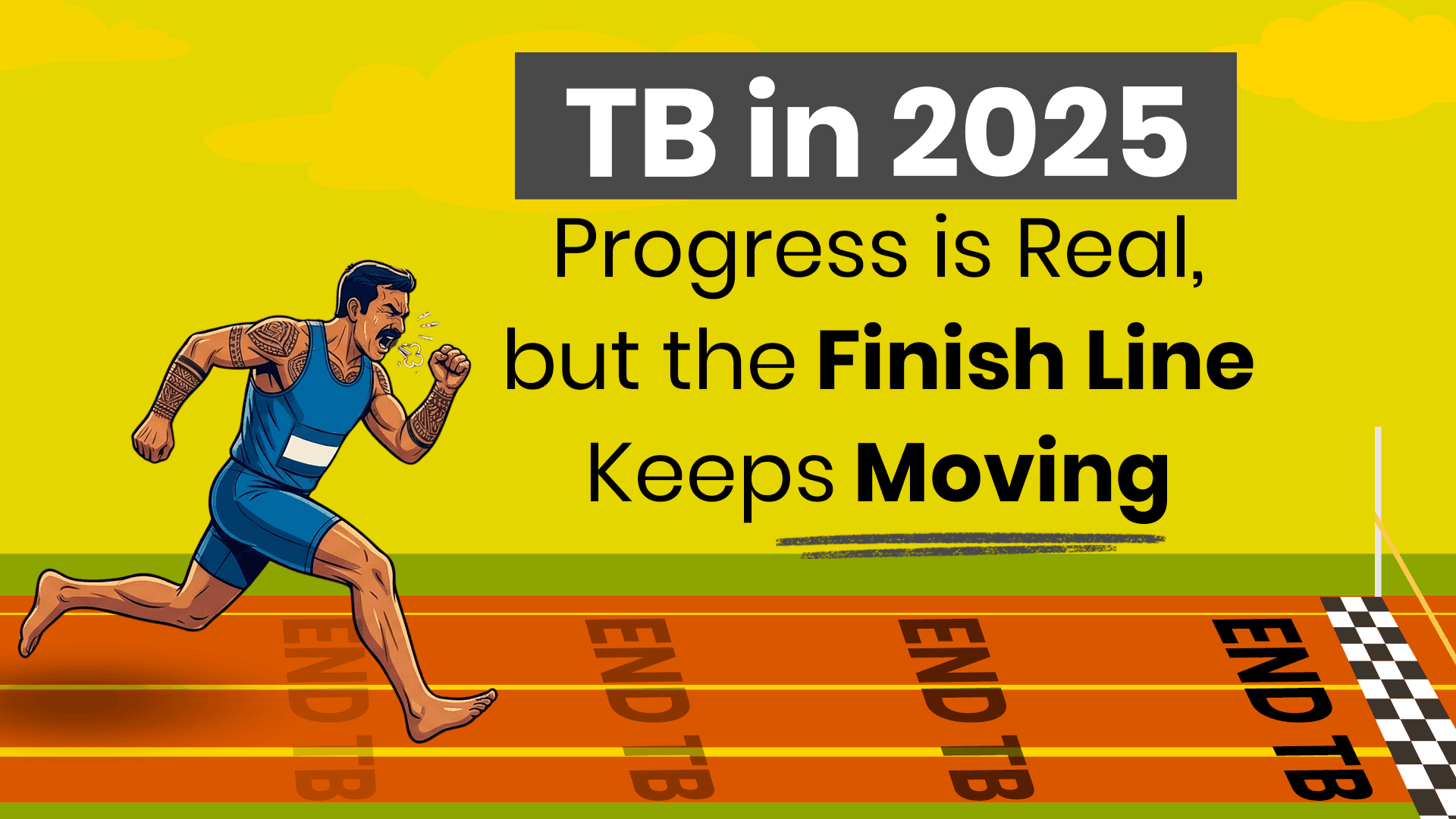
India has already demonstrated something that many countries haven’t: the ability to sustain a complex, population-scale public health programme across 25+ states with measurable results. The 21% decline in incidence, the 92% treatment coverage, and the near-elimination of the missing cases gap - these are not small achievements. But TB has plagued humanity for thousands of years. Reaching the finish line will require the same level of effort and investment beyond campaign cycles. The good news is, India has shown it knows how to run this race. The question is whether we can maintain the pace.
For more information on this blog or support, please reach out to YRGMERF on 044 33125000 and visit our website- yrgmerf.org
#TuberculosisIndia #EndTB #TBMuktBharat #PublicHealthIndia #HealthSystems #TBPolicy #GlobalHealth #TBElimination #NiKshay #DrugResistantTB #HealthEquity #NutritionAndHealth #TBStigma #InfectiousDiseases #IndiaHealth